




Engagement Ring Guide
We’re here to help you make shopping for an engagement ring as seamless as possible.
To help you find the perfect ring, we have outlined a step-by-step process for selecting a gem, ring style, and more!

Step 1: Setting a Budget
When deciding on a budget, it’s all about what feels right for you and your partner. Traditional “rules” often suggest you spend a certain portion of your income, but we believe an engagement ring should be as unique as your relationship—right down to the price. If this decision isn’t a surprise, consider discussing the budget openly with your partner to align expectations.
The price of the ring consists of two parts: the cost of the gem you select, and the cost of the ring setting. Purchasing a gemstone from us acts as a deposit to work with our design team to modify an existing ring style from our website, or create one from scratch. A custom design is priced based on material + labor—the same as our existing listed designs— so if you see something similar to what you’re envisioning, you can expect the price to be similar, as well. If you’re unsure how much to budget for custom jewelry, our team can provide a rough cost estimate based on your vision to help establish a budget for the gem. We also offer flexible payment options for U.S.-based customers through Affirm.
Our team is here to help you explore options at every price point, so please reach out with any questions. We want to ensure you feel confident and excited about your choice!
Step 2: Choosing a Colored Gemstone
The gemstone you choose is the true heart of your ring. There are a few factors to keep in mind—including gem type, color, clarity, size, and treatment (if any)—that will influence its look and price.
Below, we have broken down the most important things to consider when selecting a gem:
Gem Type
For an engagement ring, you really want a very hard and durable stone. Sapphires are an ideal option, ranking high on the Mohs scale, but if you are okay with a stone that might have some wear over time, other options include garnet and spinel. We do recommend sapphire as the best choice, but regardless of what you choose, it is important to insure your ring against damage!

Color
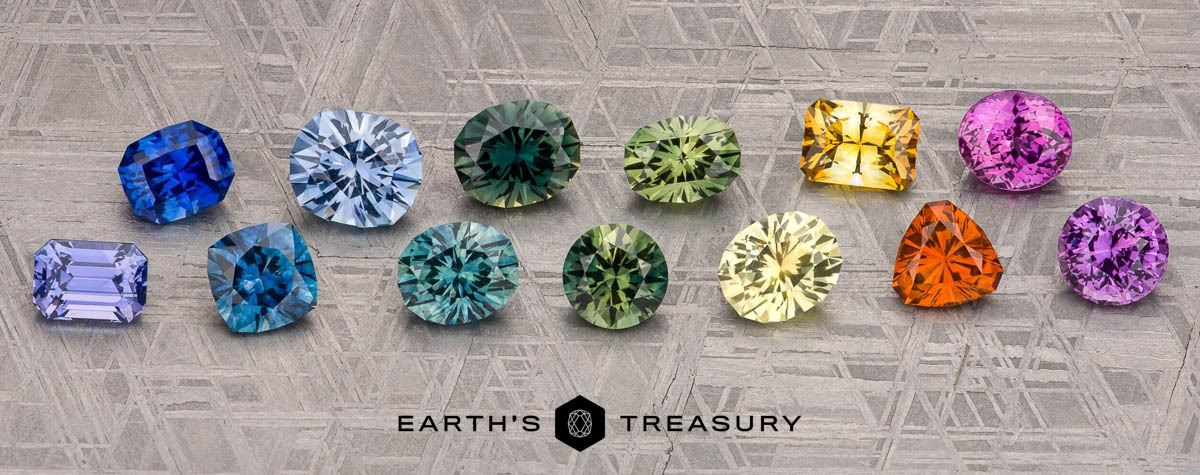
The first thing on people’s minds when selecting a colored gemstone is obvious: color! It is the most important factor, especially since gems can be found in nearly every color of the rainbow. With thousands of gems to choose from, our search filters make it easy to find one with the perfect hue in our extensive inventory.
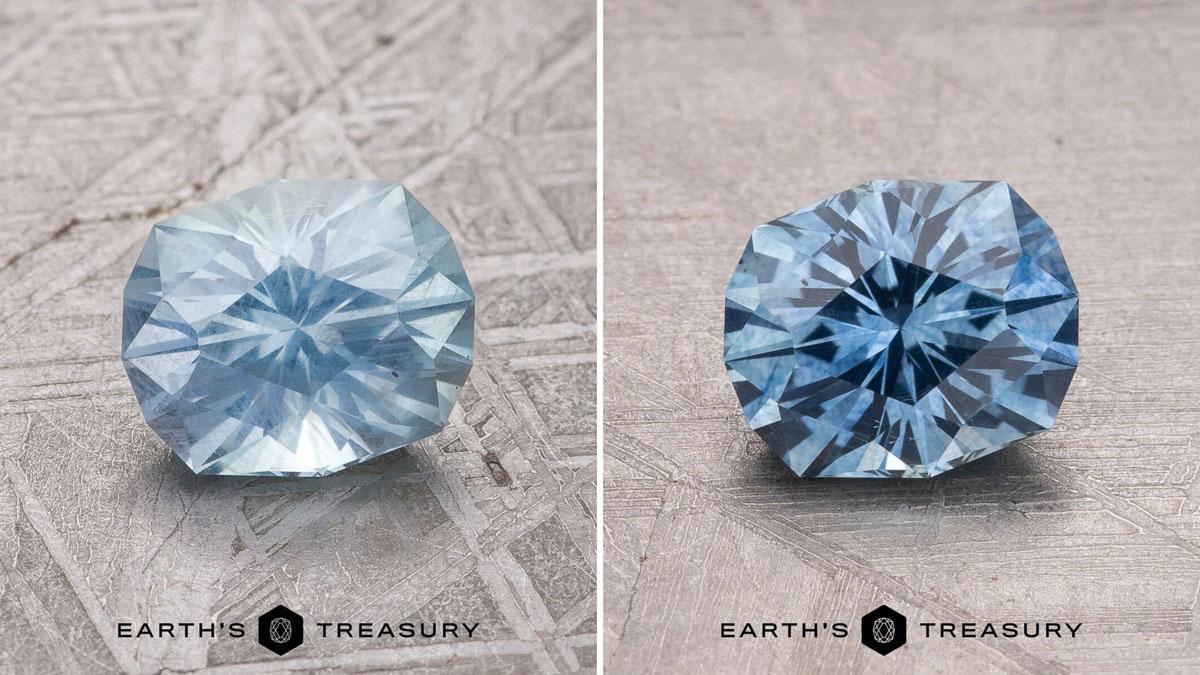
Keep in mind, though, that a gemstone’s color can appear slightly different depending on the lighting. Dark and hazy stones can appear even darker in low light conditions, while unheated sapphires can often take on a slight gray tone in incandescent lighting. Most blue-green sapphires will appear slightly bluer outdoors in daylight, and slightly greener under LED light. While our product photos are carefully calibrated to be as accurate as possible for daylight conditions, we have a risk-free review policy to help you see your top choice in person.
Treatment
Many gems are treated to improve their color or clarity. Treatment is not necessarily undesirable- it is just crucial that the treatment be disclosed, something we always do and stand behind with our authenticity guarantee.
Sapphires are typically heated to improve their clarity and color. The reality is, the best clarity and color are typically the result of heat treatment— which is why globally, around 95% of all sapphires will be heated. In general, if you can find an unheated sapphire with identical size, clarity, and color as a heated one, the unheated stone will be more expensive as it is vastly rarer than its heated counterpart.
Emeralds are typically treated with fillers like oil or modern resins to improve their clarity. Most aquamarine has been heated at low temperatures to deepen the color and shift it towards blue and away from green. Tanzanite gets its deep blue color from heat treatment. Other gems like spinel, garnet, and tourmaline are almost never treated—because there are few or no treatments that can improve their appearance.
This is a complex topic which varies for every gem type. Take a deeper dive with our articles on the Heated vs. No Heat Sapphires and on the heat treatment of Tanzanite.
Gem Shape
Different shapes of gems come and go in popularity. While some classic shapes are always in style, like a round cut, hexagon and pear shapes have experienced intermittent bursts of popularity in the past decade. Classic shapes like rounds and ovals also typically have excellent performance in terms of sparkle and brilliance- not every shape will perform as well. This is a function of the physics of light and the gem in question. For example, long marquise cuts with their narrow points look great in diamonds, but do not perform well in almost any other type of gemstone.
Some shapes are just extremely rare because the raw gems are rarely suited to be cut into those shapes. Sapphires in pears and marquise cuts are great examples- it is much more common for a rough sapphire crystal to be best suited to a round, oval, square or rectangle shape, and to cut in a sharp point would be wasting a portion of a perfectly good gem. Given that rough gems are exceedingly rare, extremely expensive, have taken millions of years to form deep underground and then been mined with great effort, we simply cannot justify wasting anything when cutting them! If you can’t find the exact shape you want in the color you want, you will have to decide if shape or color is more important and adjust accordingly.
Gem Size
Gemstones are measured by their weight in carats, but because different gem types have widely different densities, you should make sure to consider their size in millimeters as well. For example, a round diamond weighing 1.00 carats will typically have a diameter around 6.4 millimeters, but a 1.00-carat round sapphire will only measure about 6.0 millimeters across on average. The length of a gem in millimeters gives a more accurate idea of exactly how big it will appear “face-up”, as when set into a piece of jewelry.
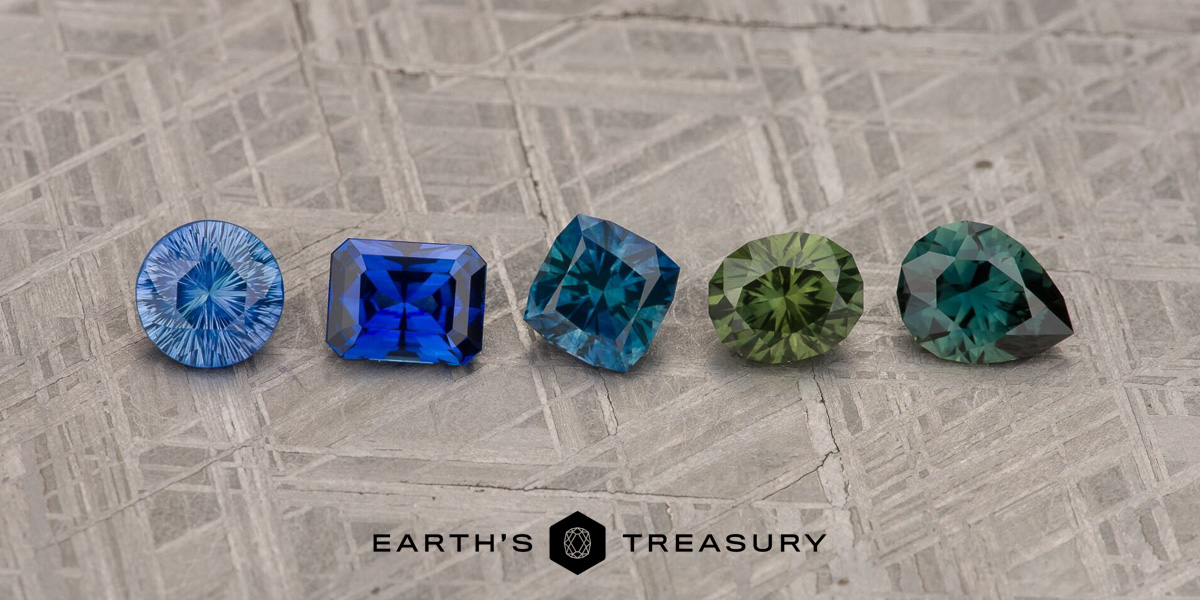
Different shapes will have different face-up sizes for any gem type. For example, square cushions will usually have the smallest face up size for their weight, while rounds will have the largest face up size at any given weight. The gems in the photo below all weigh the same, but you can see how shape impacts the visual appearance of size.
We know this can be a lot of new information to consider, but ultimately, we want you to find a gemstone that resonates with you! Unlike most retailers, we have every in-stock gem in-house, which means you can request a video comparison of up to four gems shown side by side in both natural and incandescent light so you can be confident in your decision.
We also encourage you to purchase a gem to view it in a variety of lighting before deciding to move forward with jewelry production. Everyone perceives color differently, and phone and computer screens can sometimes alter how a gem appears. Even sunlight at different times of day or in various locations can make a gemstone look slightly different!
Our risk-free review and return policy enables you to view any gem in person at low to no cost to you so you can be 100% sure it’s the right one for you. See the full policy for details on potential shipping and restocking fees.
Step 3: Choosing a Ring Style
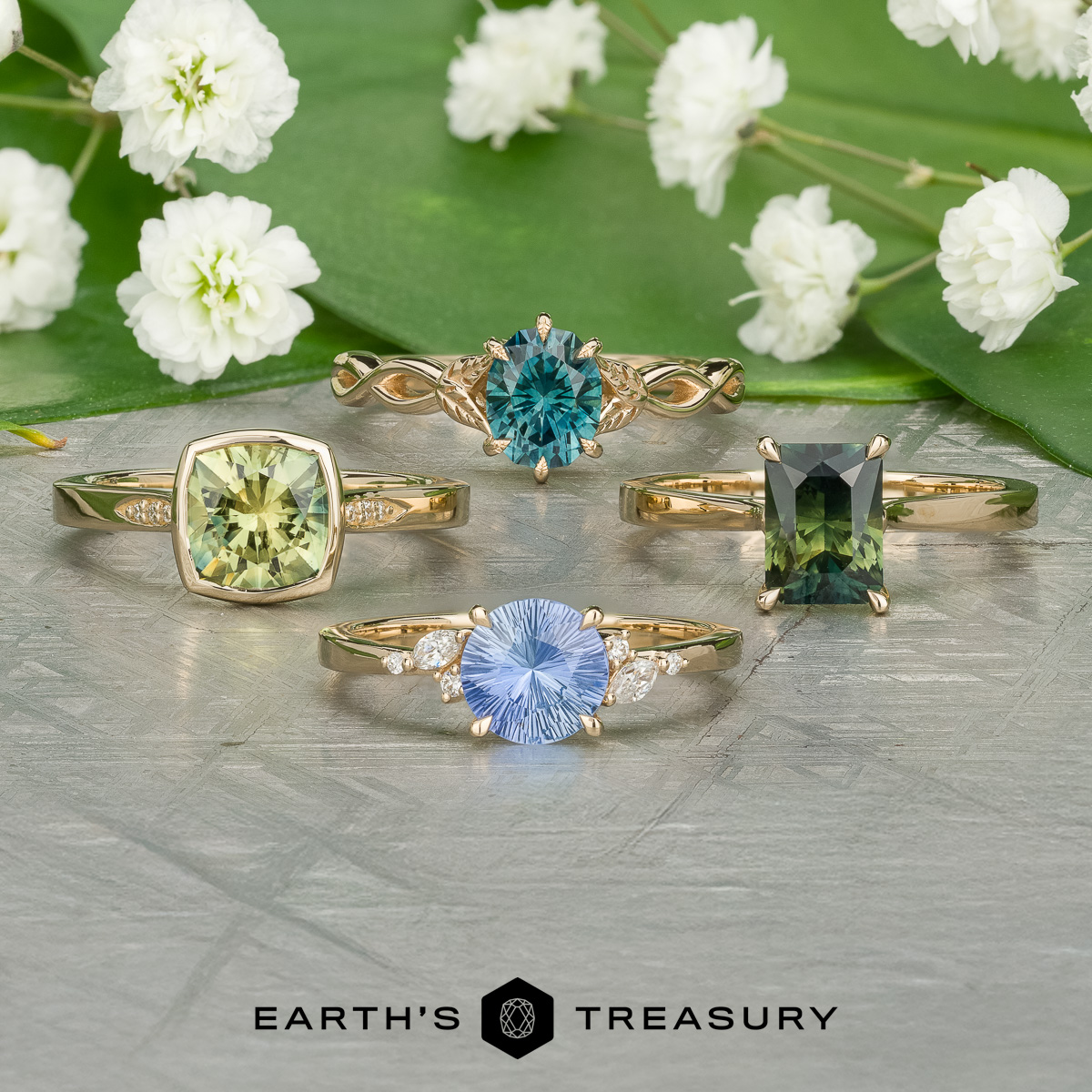
Our engagement rings are shoppable by style to help your search. If you see a ring you like but want to tweak a bit, you can connect with our designers to modify it. If you don’t see what you are dreaming of, just reach out to us. Our expert design team can create almost anything you can imagine— and when you buy the gem and ring through us, there are no custom design fees and no fees to modify our existing designs.
Learn more about our custom design process here or watch our Lead Jewelry Designer, Lauryn, walk you through the process on YouTube channel here.
Step 4: Purchasing
Payment Options
We accept online payment in the form of VISA, MasterCard, Discover, and American Express credit cards. We also offer financing through Affirm. You may also contact us to arrange payment via bank wire or electronic funds transfer.
Shipping
Before shipping the ring, our team will reach out to confirm the details with you and ensure you know to expect it. We ship all our jewelry overnight with signature required in discreet packaging. If you need to keep the package a secret from someone you live with, or if it’s a hassle to have someone available to sign, just ask us about the option to have the package held at a FedEx location for pick up at your convenience. To ensure a smooth and secure experience, we ship all orders fully insured, with most orders arriving within 1-2 days for U.S. customers. Domestic orders over $1,000 USD are automatically eligible for complimentary FedEx Standard Overnight shipping (international orders excluded).
Insurance
The most common way to insure your jewelry is to add it to your existing homeowners or renter’s insurance policy. However, dedicated jewelry insurance will typically cover more than those policy riders— for example, you can get coverage for minor wear and tear repairs, versus just for loss or theft. If you would like a dedicated plan, we highly recommend Jeweler’s Mutual, the leader in the field. Within 1-2 weeks after your jewelry is delivered, you will receive an email with an appraisal document you can use to get it insured anywhere; the email also includes a direct link to get a quote from Jeweler’s Mutual.
Metal Types
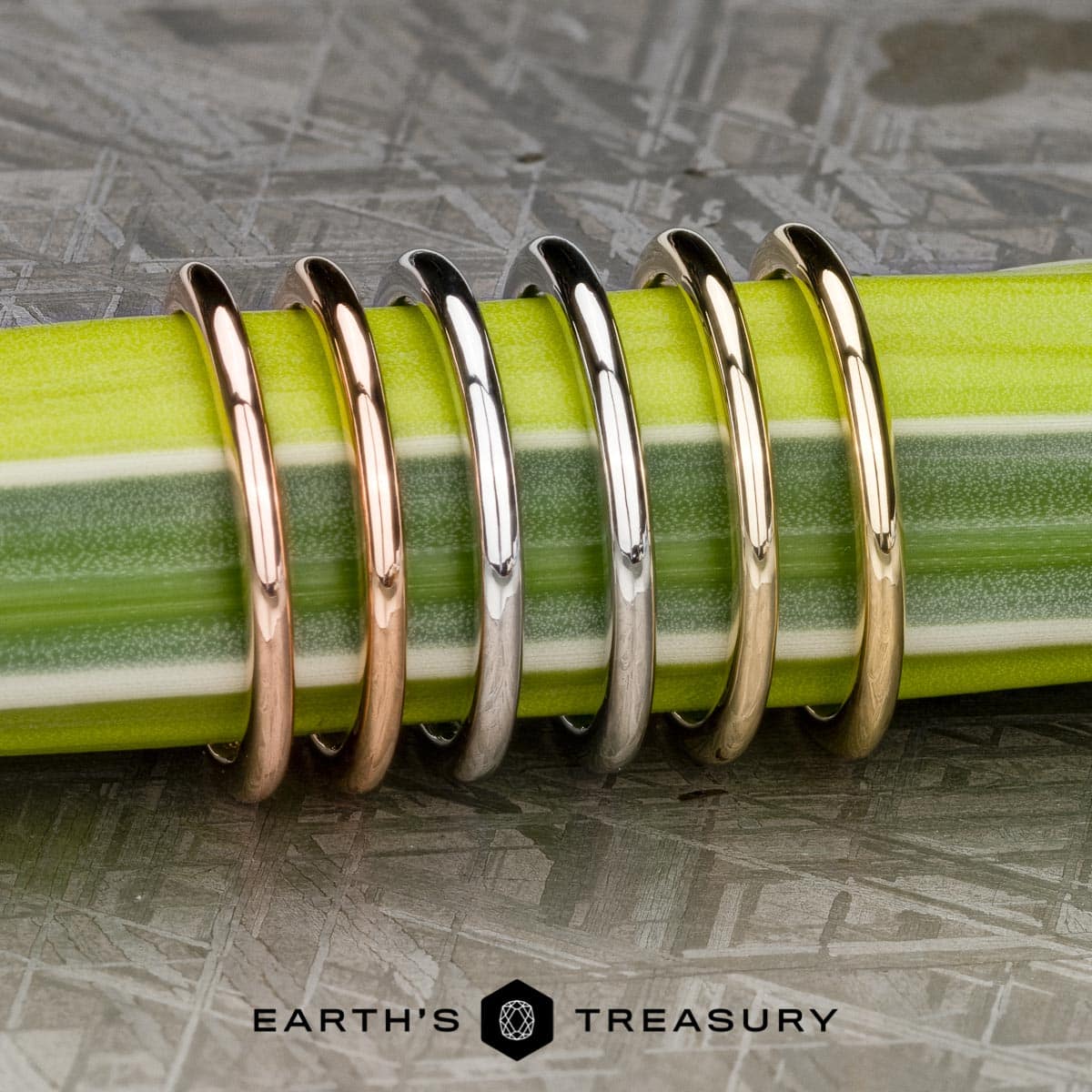
When selecting your ring, you will also choose the metal type of the ring. We have a variety of options listed below:
- 14K or 18K White Gold: White gold is plated with rhodium, a rare and corrosion-resistant metal that gives white gold a bright white finish. Rhodium plating will wear off over time, but re-plating is a simple process available for a small fee. Be aware that almost all white gold alloys include small amounts of nickel, which some people are allergic to; if that’s a concern, platinum is a better choice.
- 14K or 18K Yellow Gold: Due to a higher concentration of pure gold, 18K yellow is brighter and more yellow than 14K yellow gold. The higher gold content of 18K does increase the cost slightly. Both are ideal for daily wear jewelry, making them a great option for engagement rings.
- 14K Rose Gold or 20K Pink Gold: Rose gold contains more copper in the alloy than our yellow gold options, creating a warm, pink hue. Our 20K pink gold appears slightly peachier than 14K rose gold.
- Platinum: Platinum is an ideal choice for white metal since it doesn’t require plating, like white gold, and has the advantage of being hypoallergenic. It also very durable; vintage platinum pieces from over 100 years ago show less wear than similarly-aged gold jewelry.
Upon request, we can create a two-toned ring using two different metals, for example a gold band with a platinum head. Read more here on choosing a metal.
Sizing
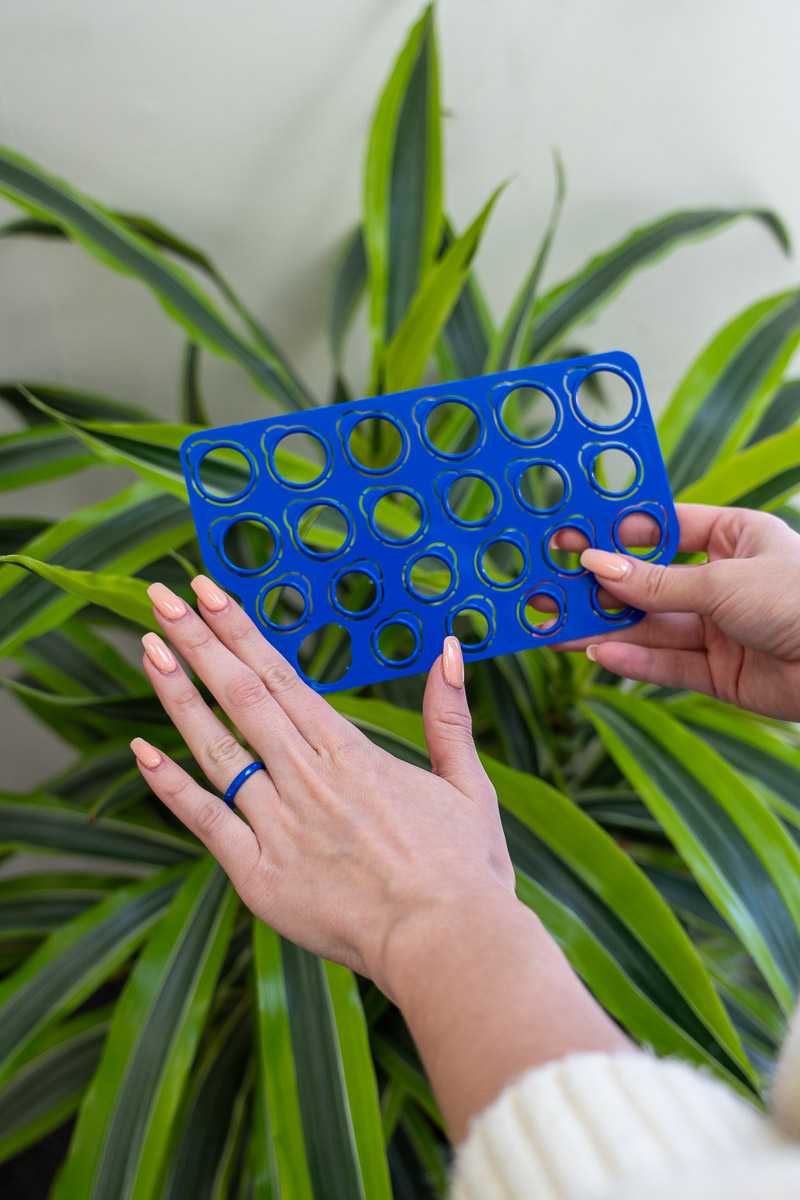
We recommend talking to your partner about their ring size to ensure the best possible fit. If your partner is involved in choosing their ring, we can provide a ring sizer when you purchase a gem at no cost, or include a set of 3D printed prototypes of the ring for a small fee to confirm the fit.
If the proposal is a surprise, check out our Ring Size Guide for some ideas for discreet ways to figure out their size. We offer one complementary resizing for rings over $5,000 within 6 months of your purchase to help ease the uncertainty that comes with surprise proposals.
Remember, finger size can fluctuate based on several factors, including weather, activity level and diet, and having just a little extra room is often preferred to accommodate that. If you do not know the exact size, it is better to get a slightly larger size (ideally no more than one size larger than they need) so your partner can at least try it on when they receive it.
Additional Tips
Engraving
We can engrave messages on the inside of a ring for a small fee. We offer typically up to 12 characters in either script or block font. Leave a message in the notes section of your order (on the final page of checkout) or reach out to the designer assigned to your piece. Be sure to triple check your capitalization, spelling and punctuation to ensure the right message is included!
Timing
Made-To-Order Jewelry: Made-to-order jewelry pieces are made specifically to fit your chosen gemstone using a jewelry design (or a modified version of a design) from our website. The typical turnaround time is 4-6 weeks after you place your order; once your order is placed, one of our designers will be assigned to your piece and will reach out both to confirm any details and to set a date your piece will be completed by. We are often running ahead and may have your piece ready to ship a week or more earlier than your completion date; however, to be on the safe side, plan to expect delivery 1-2 business days after your completion date.
Custom Designs: Fully custom-designed jewelry pieces are made specifically to fit your chosen gemstone using a jewelry design created specifically for you. Custom-designed jewelry also has a typical turnaround time of 4-6 weeks after you approve the final design; however, the length of the design process up to that point may vary based on how focused your vision is and how many revisions you request.
Ready to Wear: We offer a small selection of ready-to-wear rings that are available to ship within 1-2 days of your purchase, or in about 1 week if resizing is required.
Expedited Service: If you need the ring sooner than 6 weeks, contact our team! We offer expedited services for an additional fee and will work with you whenever possible to meet your timeline.
Shipping
Before shipping the ring, our team will reach out to let you know it’s ready and to request confirmation from you before it goes anywhere. We ship all our jewelry overnight, fully insured, and signature required in discreet packaging. Anyone present at the delivery address can sign for the package, or you can ask us to send it to a FedEx location for pick up at your convenience.
Wedding Bands
Keep in mind that once you tie the knot, your engagement ring may need to be paired with a wedding band! When custom designing an engagement ring, your designer will discuss the future wedding band with you. Some engagement ring designs on our website have suggested matching designs, while others can be paired with a wide variety of bands. If you don’t know if a band will work with your ring, just reach out and we’ll be happy to help. We keep the CAD files for every engagement ring, so we can guarantee a perfect matching fit between the two.
We also offer unisex and men’s bands and are always happy to help you create your entire wedding set. You can browse our wedding band selection here.