




What Makes Buying a Sapphire Different from Buying a Diamond?
Most people have some idea of how to buy a diamond, as decades of education from the Gemological Institute of America and others have made the “Four C’s” a well-known set of criteria by which diamonds are judged. However, when it comes to sapphires, the rules change.
You may be surprised that, unlike diamonds, there is no industry standard system for grading color, cut, or clarity in colored stones, as they are simply too variable for a “one size fits all” approach. Below we’ve outlined a few key differences between shopping for diamonds and sapphires.
Color
When you’re buying a diamond, “color” usually refers to how colorless it is, but with sapphires, color is typically the number one thing driving the purchase.
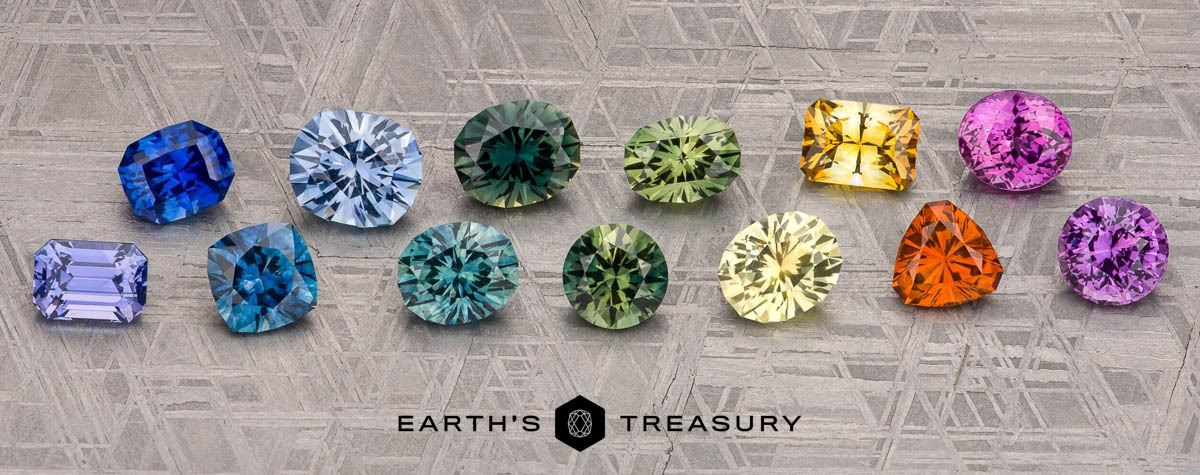
Sapphires come in nearly every hue of the rainbow, from velvety blues and mint greens to peachy-pinks and golden yellows. Even within a single color family, no two stones are alike. We broke down how we describe sapphire color here.
To help understand a stone’s true color, we photograph each gem using scientifically color-calibrated lighting and cameras and offer video requests so you can view a gem on hand in both incandescent and natural lighting to see how the color shifts. We strive to represent the color of our gems as true to life as possible, knowing it is usually the primary factor when you select your gem.
Cut
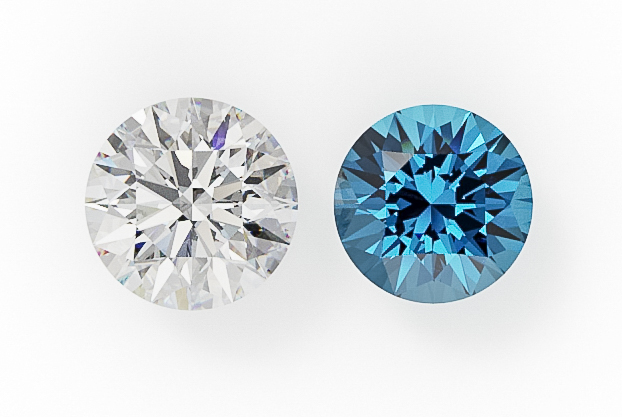
Many diamond cuts are standardized and graded because maximizing brilliance is the goal. Sapphires, on the other hand, are cut to highlight their color while balancing brilliance. The shapes of rough sapphires are also much more diverse than what is found in diamonds, so the variety of cuts is much more diverse— as wasting any material is just not financially wise, given how rare and expensive rough sapphires are— vastly more rare than diamonds.
As our founder, Jeff Hapeman, notes, “The best sapphire cut balances brilliance, color, and the shape of the rough— there’s no universal ‘ideal’ like there is for diamonds.” We use precision cutting, a specialized faceting technique, with our own gem designs to achieve perfect symmetry with meticulously planned facets that optimize light interaction for the best brilliance.
Unfortunately, a focus purely on yield (or the biggest gem possible) and color often means that sapphires come to market with fairly poor cutting. They might have a window— where you can see through the gem— or be too deep, in an effort to deepen the color. Too deep can lead to extinction, or black areas in the gem caused by poorly-optimized angles on the facets.
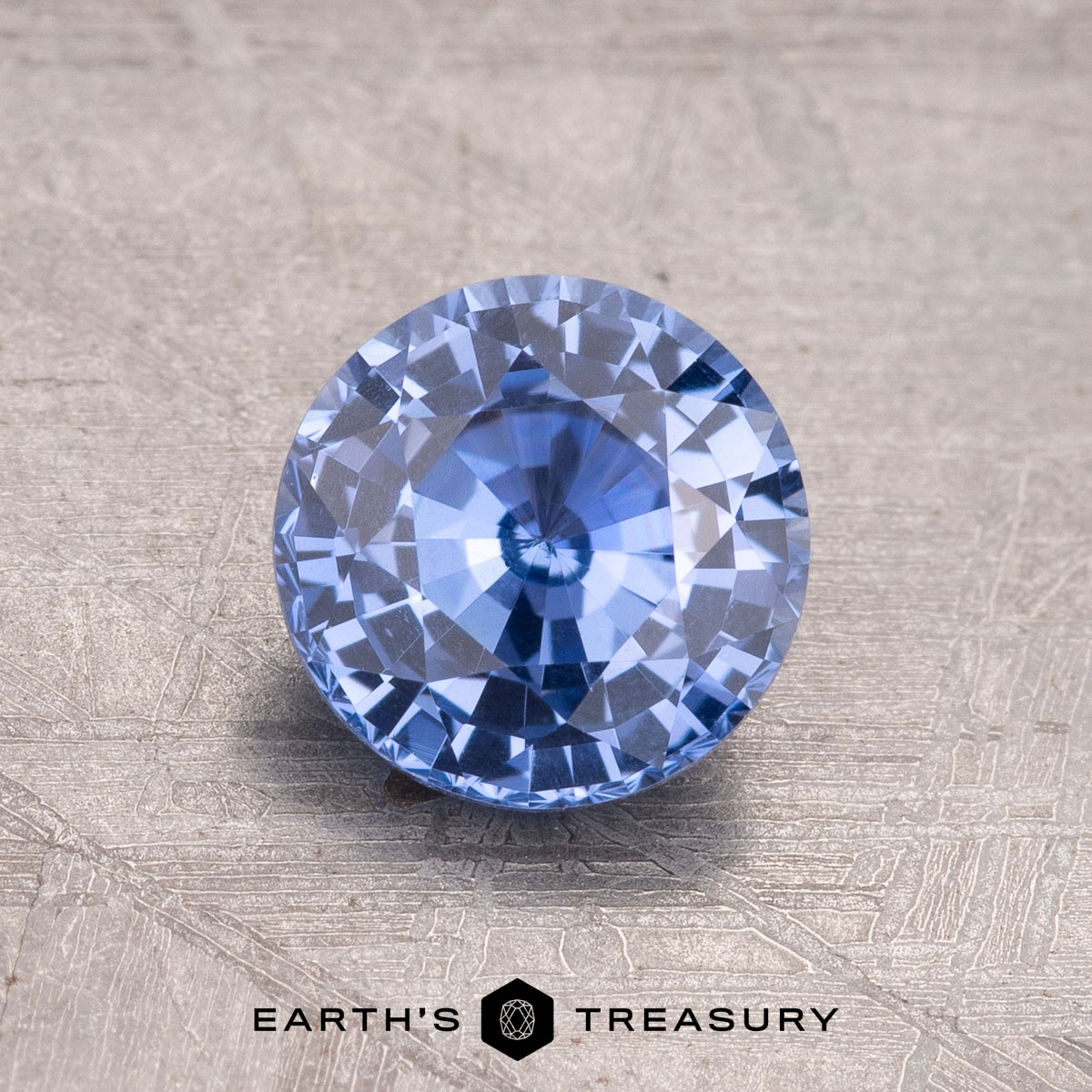

All our sapphires are either precision-cut in award-winning designs created by Jeff, or in classic designs like the diamond round brilliant that he has carefully mathematically optimized for the refractive index of sapphire. Occasionally, we will offer some very well-cut sapphires cut by other artists as well. We are confident that you won’t find a larger selection of fine sapphires with high quality cutting anywhere else.
Clarity
Unlike diamonds, there is no industry standard system for grading clarity in colored stones, as they are too variable and no two stones are alike. Preference plays a big role in what is “valued” or not in colored gemstones, especially sapphires. Almost all sapphires will have some inclusions— loupe-clean sapphires are incredibly rare. The best sapphires will be eye-clean or loupe-clean, meaning you can’t see any inclusions without using some magnification. That said, it’s okay for a sapphire to have some small inclusions. It tells a story of how the gem was formed deep underground, millions to hundreds of millions of years ago.
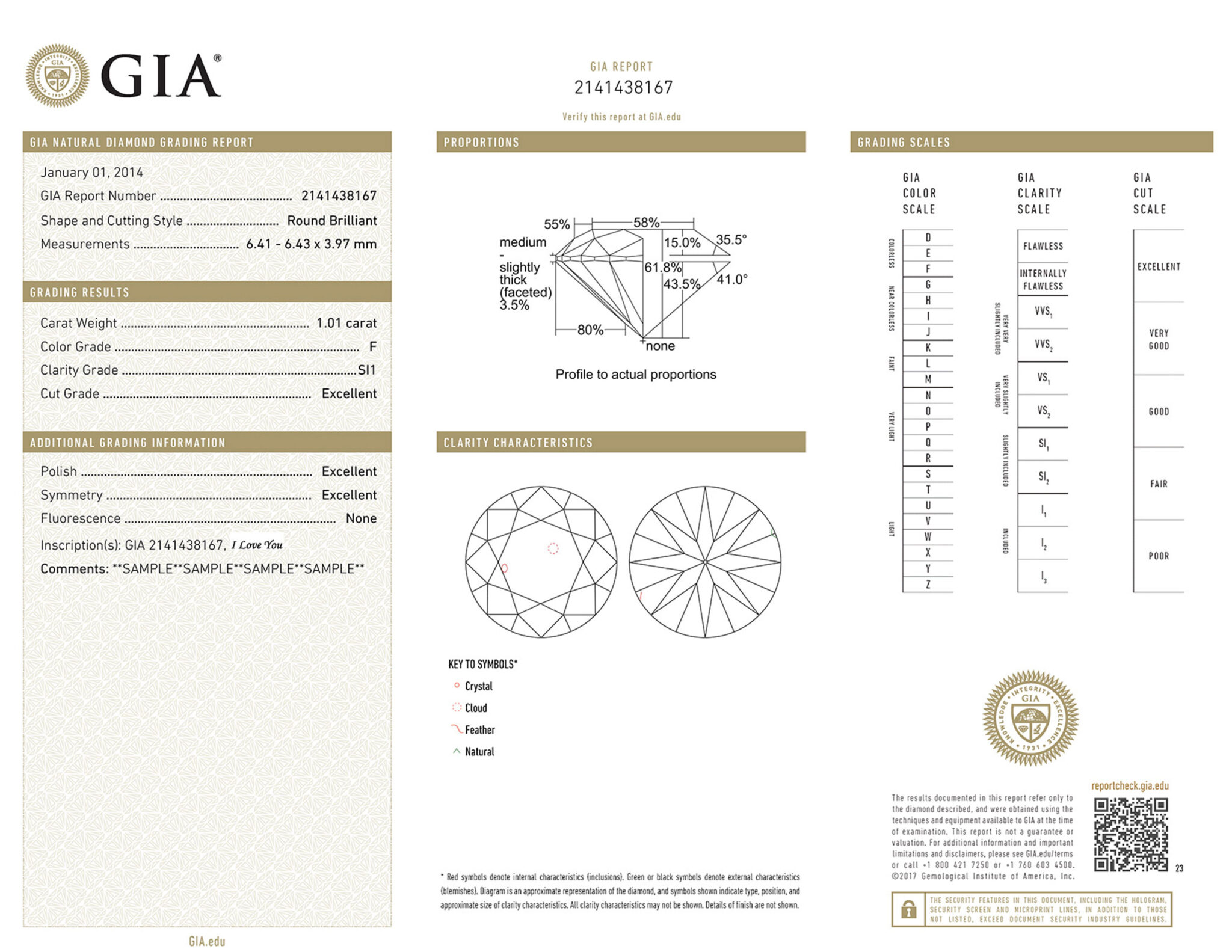
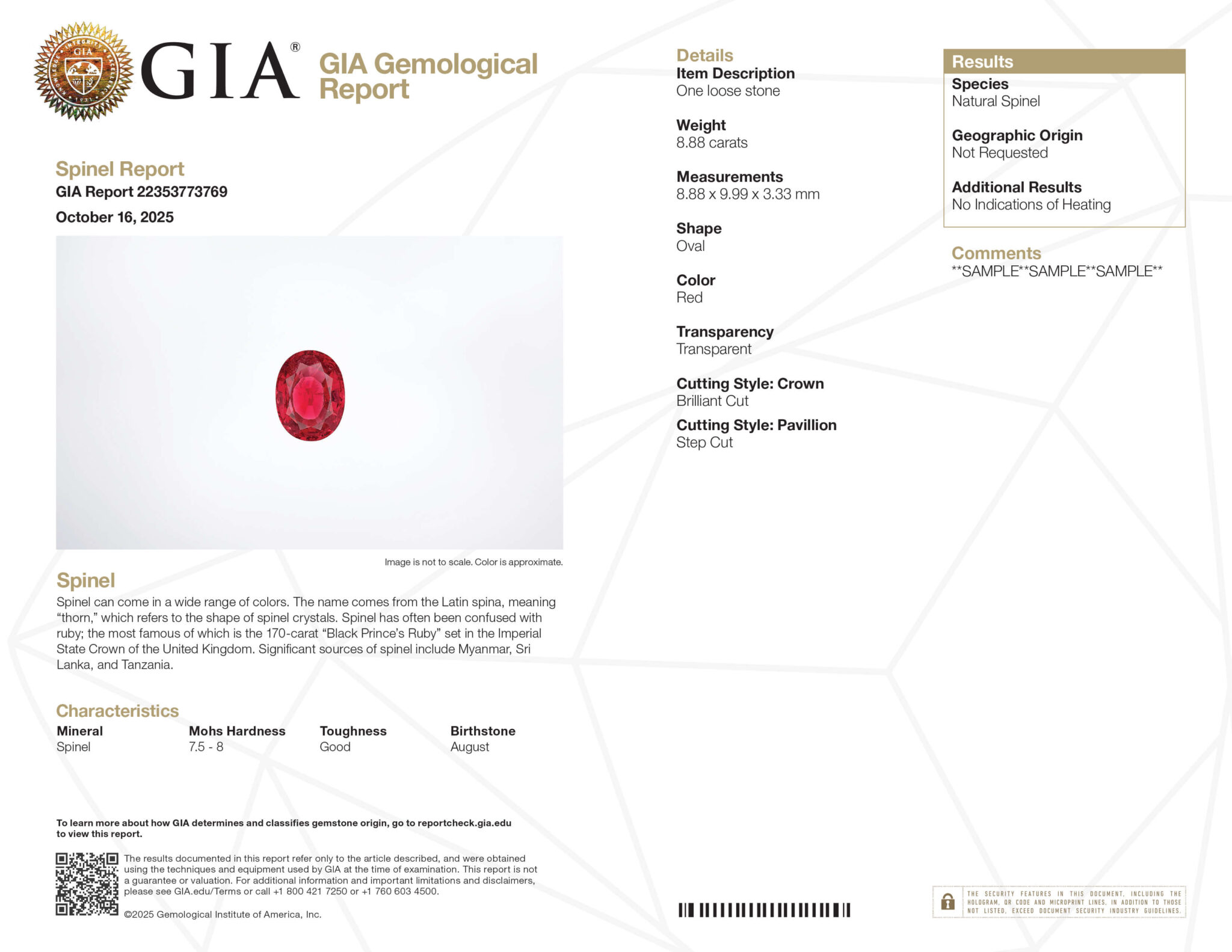
The GIA reports below are examples to show how you won’t see cut or clarity grading on a lab report for a sapphire, unlike a diamond. The diamond report (left) outlines grading information, while the sapphire report (right) only provides information about origin and treatment. Although there is no industry-wide grading system for sapphires, clarity is still an important factor. We’ve outlined how we describe gem clarity here.
Size
Gemstones are measured by their weight in carats, but because different gem types have different densities, you should make sure to consider their size in millimeters, as well. For reference, an ideal cut 1-carat round diamond typically measures 6.4–6.5 mm in diameter, while an ideal cut 1-carat round sapphire is slightly smaller at 5.8–6.0 mm across. The length of a gem in millimeters gives a more accurate idea of exactly how big it will appear “face-up”, as when set into a piece of jewelry. Learn more in our gem size guide here.
Shape
Both sapphires and diamonds can be found in a variety of classic shapes; however, not every shape performs well. For example, long marquise cuts with narrow points look great in diamonds, but do not perform well in almost any other type of gemstone. This is a function of the physics of light and the gem in question.
The shape of natural sapphire crystals and their extreme rarity dictate the shapes it can be cut into. Unlike diamonds, round brilliant cuts are much less common in sapphires, as the crystals are usually best shaped to cut ovals or cushions. The sapphires from Rock Creek, Montana, are a rare exception—rounds are unusually common from that location. What this means is that you won’t always be able to find the exact shape you want, particularly if you also already require a specific color or hue; at some point, the rarity is so high that no options will exist. Typically, color is most important, and at times you might have to consider an alternative shape to get your ideal color, size, and clarity.
Price
Sapphire pricing depends primarily on color, followed by size and clarity. A small, vividly saturated sapphire can cost more than a larger one with a muted color. That said, color is a very personal thing, and price is more set by the popularity and therefore market demand for any given color, which is not to say one color is “better” than another.
Contrary to popular belief, heat vs. no heat is not the most important consideration. Because globally only about 5% of all sapphires have good enough clarity and color to cut without heating, it’s exceedingly rare to find a stone that has the best color and clarity without treatment. If you can find two stones that tick every box for size, color, clarity, and shape, and one is unheated, then most certainly it will cost anywhere from 30-50% more.
In general, sapphires offer greater variety and flexibility in price than diamonds, making them a fantastic option for couples who want a beautiful, meaningful stone at different budget levels. However, because each sapphire is unique, price comparisons between stones can be less straightforward—another reason to buy from a trusted source that specializes in them.